
Joining Techniques
FMW Friedrich
Industrial Riveting Technology in Manufacturing
Our EXPERTISe
Our industrial joining technologies offer versatile solutions for a wide range of manufacturing requirements. Radial point riveting, Orbital riveting (GBA), compression riveting, as well as Joining, Roll-forming, and Bushings create precise and durable joints for demanding applications.
The high durability and reliability of our products are evident in our numerous long-standing customer relationships. Our quality management system, certified to DIN EN ISO 9001:2015, ensures clearly defined and reliable processes.
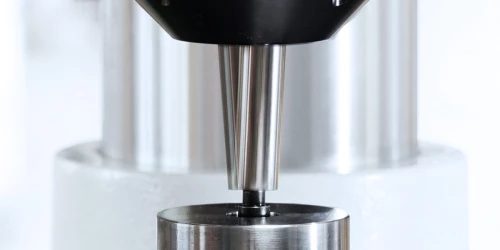
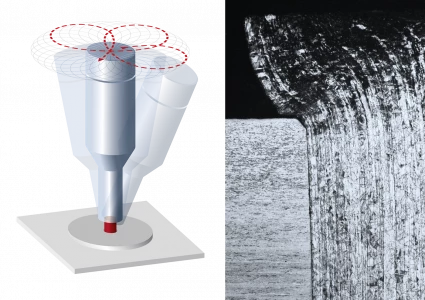
Radial point riveting
The riveting die depicts a hypocycloidal path.
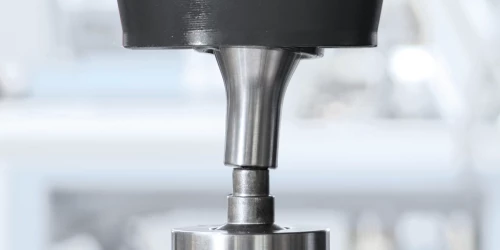
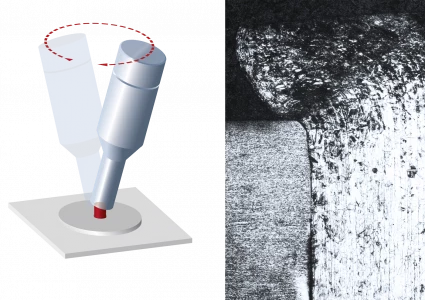
Orbital riveting (GBA)
The riveting die is driven by a circular movement.
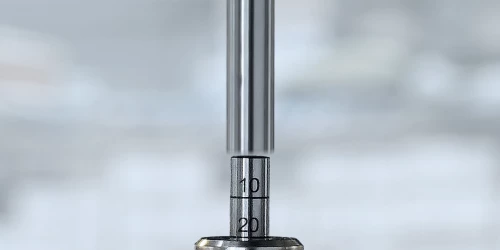
Compression riveting
The deformation takes place without rotational movement.
Joining
Axial force is also used to precisely insert two components into each other.
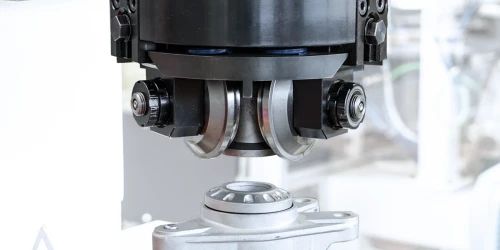
Roll-forming
Roll-forming heads are used to roll bearings into housings and meet specific requirements regarding strength, tightness and chip-free processing.
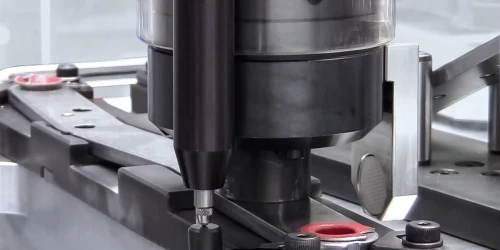
Bushings
In this process, plain bearing bushes are inserted and flanged by axial force.
Radial point riveting
The riveting die follows a hypocycloidal path, continuously alternating between the vertical position and the maximum deflection angle. The resulting point contact compresses the riveting material deep within the rivet and forms it from the inside out into a stable closing head.
Applications:
- Solid rivets
- Non-round rivets
- Small peel rivets
Orbital riveting (GBA)
The riveting die is driven by a circular movement and thus rotates at a constant setting angle. The resulting orbital deformation of the material requires the workpiece to be securely fixed.
Applications:
- Hollow rivets
- Flaring
- Large peel rivets
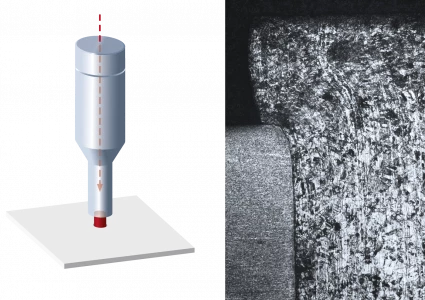
Compression riveting
The deformation takes place without rotational movement. The high axial force effectively fills the component bore, generating high bearing pressure throughout its depth.
Applications:
- Riveting with solid rivets subject to high shear loads
Joining
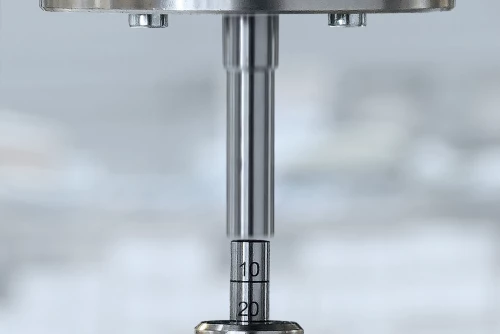
Axial force is also used to precisely insert two components into each other. This produces both bearing pressure and plastic deformation of the material.
Applications:
- Bearings in bearing seats
- Dowel pins
- Clinch nuts or clinch studs
Roll-forming
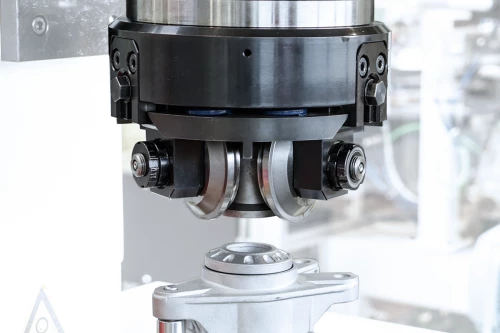
Roll-forming heads are used to roll bearings into housings and meet specific requirements regarding strength, tightness and chip-free processing.
The material is deformed through multiple rolling passes. Depending on the application, axial and/or radial deformation processes are gently combined in a chip-free process.
Applications:
- Securing bearings
- Securing internal components in housings
- Constriction of pipes
Bushings
In this process, plain bearing bushings are inserted and flanged by axial force. The bushings can be flanged in one or several passes, depending on their characteristics and requirements.
To achieve consistently high quality and a uniform torque curve in the finished bearings, the bushing is finally calibrated in diameter and height.
Applications:
- Plain bearing seats in multi-joint assemblies
- Steel-backed bushings and fabric-lined bushings
- Coated and uncoated bearing bushings